
The tiny orange superberry you should know about
Quick overview — what is Sea Buckthorn?
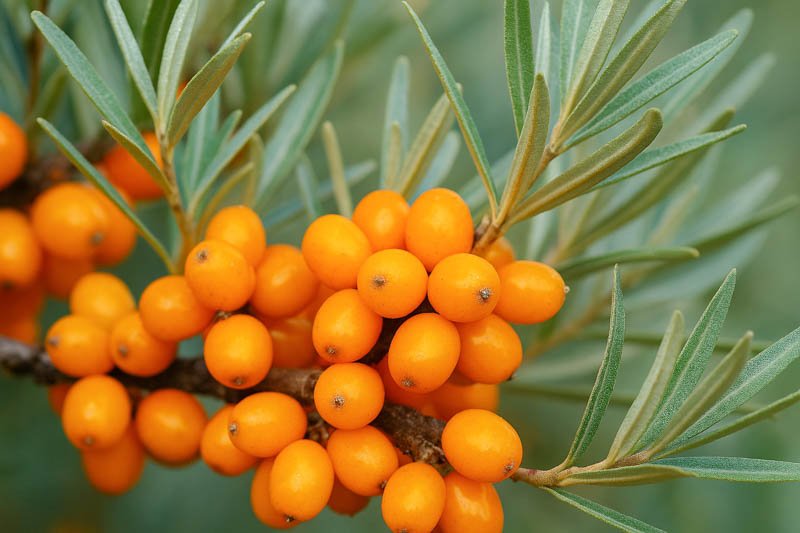
Sea Buckthorn (Hippophae rhamnoides) is a hardy, thorny shrub that produces small bright-orange berries. It grows wild across Europe and Asia — especially in cold, coastal and mountainous areas — and nearly every part of the plant (berries, leaves, seeds, oil) has been used historically as food, fodder, medicine and for land reclamation. The berries are intensely aromatic and tart; common modern forms are oil, juice, powder and supplements.
Botany, Distribution & History
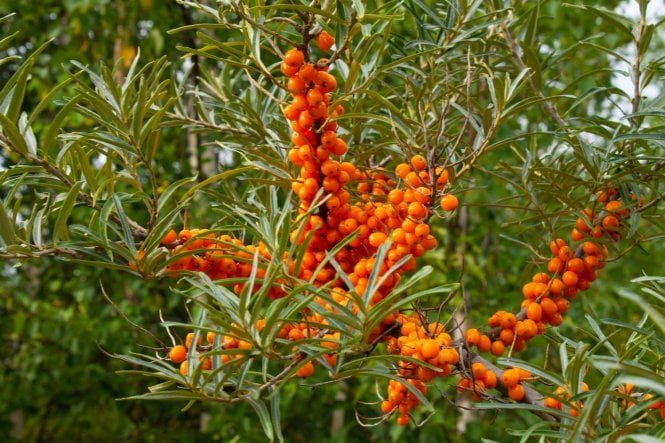
Botany & habitat: The shrub typically reaches ~2.5 m, with narrow leaves and orange-yellow berries. It tolerates poor soils, salt spray, wind and cold, which is why it’s common on dunes and mountains. (Source: Britannica: Sea buckthorn.)
Geographical spread: Widespread across Europe and large parts of Asia — from coastal Britain and Scandinavia to Central Asian mountains.
Historical & ethnomedicinal uses: Records from early modern Europe note local culinary uses (sauces and preserves), while traditional Tibetan and Chinese medicine used Sea Buckthorn for digestive, respiratory, hepatic and skin conditions. Its ecological value (erosion control, land reclamation) is also long-recognized. (See: Phytochemistry and applications review (PMC) and MDPI review on sea buckthorn.)
What’s inside — nutritional & bioactive composition
Sea Buckthorn is unusual for a fruit because it contains both water‑soluble nutrients (vitamin C, B vitamins) and fat‑soluble nutrients (carotenoids, vitamin E) as well as a wide array of fatty acids and polyphenols. This combination makes it nutritionally and pharmacologically interesting.
- Vitamins: Very high vitamin C (often higher than oranges in comparable analyses), vitamin E, and provitamin A (beta‑carotene).
- Carotenoids: Beta‑carotene, zeaxanthin, lycopene and others — important for antioxidant and skin/eye health.
- Fatty acids: Omega‑3, omega‑6, omega‑9 and the less common plant-based omega‑7 (palmitoleic acid) — the latter is relatively rare and linked to skin and mucosal function. (See: Lipid profile review (BMC).)
- Polyphenols & flavonoids: Isorhamnetin, quercetin, kaempferol, proanthocyanidins and phenolic acids — these compounds provide antioxidant and anti-inflammatory activity.
- Other bioactives: Phytosterols, triterpenoids, minerals and pectins. Over 150–200 different bioactive molecules have been reported across plant parts in some phytochemical surveys.
What does Omega-7 do?
Research suggests it helps support:
skin hydration and elasticity
healthy mucous membranes (eyes, mouth, digestion, respiratory tract)
cellular repair and regeneration
metabolic balance
smoothness and suppleness of tissue
This makes Omega-7 particularly valued for skin health, eye moisture, digestive wellness, and overall cellular nourishment.
Health & medicinal benefits: evidence and mechanisms
Research mixes in-vitro, animal and human studies. Findings are promising across several systems; however, the level of evidence differs by outcome and preparation used. Below is a system-by-system look at the current scientific picture and biological rationale.
Antioxidant & anti‑inflammatory potential
Sea Buckthorn’s vitamin C, carotenoids, tocopherols and polyphenols create a robust antioxidant profile that neutralizes free radicals and reduces oxidative stress markers in laboratory studies. Flavonoids and phenolic acids modulate inflammatory signaling pathways, which plausibly contributes to reduced tissue inflammation in animal models. (Review: RSC: phytochemistry & bioactivity review).
Cardiovascular & metabolic health
Animal studies and smaller human trials suggest Sea Buckthorn components may improve serum lipid profiles (reducing triglycerides and sometimes LDL markers), modulate lipid metabolism and reduce fat accumulation in liver and adipose tissue. Some reviews identify potential utility in metabolic syndrome components (abdominal obesity, dyslipidemia, insulin resistance), though larger RCTs in humans are still needed. (See: PubMed review on metabolic syndrome and PMC review.)
Liver protection
Preclinical models show hepatoprotective effects: reduced inflammatory signaling in the liver, prevention of chemical-induced damage, and protection against fatty‑liver changes in high‑fat diet models. Mechanisms likely relate to antioxidant action and modulation of lipid‑metabolism genes. (See the comprehensive review: Phytochemistry & applications (PMC).)
Skin & dermatological benefits
Topical and oral Sea Buckthorn preparations have been studied for wound healing, atopic dermatitis, psoriasis support and general skin hydration/elasticity. The presence of palmitoleic acid (omega‑7), carotenoids and vitamin E helps explain improved barrier repair, hydration and antioxidant protection in skin studies. (For clinical and mechanistic discussion: PubMed: dermatology studies and ScienceDirect: cosmetic & dermatology review.)
Neuroprotective & multi-system potential (early-stage)
Because oxidative stress and inflammation underlie many neurodegenerative and systemic conditions, some preclinical evidence suggests Sea Buckthorn extracts may exert neuroprotective effects and protect tissues from radiation or chemical insults. These are early-stage findings and should be seen as hypothesis-supporting rather than definitive. (See: RSC review.)
Why Sea Buckthorn is special — synergy of components
Sea Buckthorn is notable because it brings together water‑soluble vitamins (vitamin C), fat‑soluble nutrients (carotenoids, vitamin E), rare fatty acids (omega‑7) and polyphenols. This combination supports both antioxidant defenses and membrane/lipid functions (skin, mucosa, lipid metabolism). The diverse set of compounds allows multiple, complementary mechanisms of action rather than a single-target effect. (See BMC lipid review: BMC Lipid World.)
Research strengths & limitations
Strengths: A clear biochemical profile (vitamins, carotenoids, fatty acids, polyphenols) and consistent in-vitro/animal evidence supporting antioxidant, anti‑inflammatory, dermatological and hepatoprotective actions.
Limitations: Human clinical trials are fewer and often small. Effects vary by preparation and processing. Long-term safety and drug interaction data (especially at high doses) are not exhaustive. More large, well-controlled RCTs are needed to confirm efficacy for specific medical indications.
Bottom line: Sea Buckthorn is a nutrient- and phytochemical-rich botanical with strong plausibility for supporting antioxidant defenses, skin health, metabolic and liver resilience. It is a valuable functional food and supplement candidate — but not a cure-all.
Historical & ethnobotanical context
Historically used as fodder, food, medicine and for land restoration, Sea Buckthorn’s practical ecological role was as important as its nutritional uses. In Northern Europe and Central Asia it was used for preserves and condiments, while Tibetan and Chinese herbal traditions used it medicinally. (General info: Wikipedia: Hippophae rhamnoides, and a historical review: Journal of Nutritional Science — historical uses.)
Sea Buckthorn’s story begins thousands of years ago across Central Asia, the Himalayas, and the cold, rugged landscapes of present-day Russia and Mongolia. Its Latin name — Hippophae, meaning “shiny horse” — comes from ancient accounts of horses fed sea buckthorn leaves and berries developing glossy coats and greater vitality.
Traditional systems used the berries, leaves, and bark for:
supporting digestive and respiratory well-being
nourishing the skin
restoring vitality in harsh winters
promoting general strength and recovery
For centuries, the plant’s resilience in extreme climates made it a valuable survival food — ideal for boosting nourishment when other fruits were unavailable.
Today, modern analysis confirms what ancient healers observed: sea buckthorn is one of the most nutrient-dense berries on Earth.
Used in Traditional Eurasian Medicine for Over 1,000 Years
The berry originates from the mountainous and coastal regions of Europe and Asia, especially the Tibetan Plateau, Mongolia, Russia, and Northern China.
Traditional healers used Sea Buckthorn to:
restore energy and stamina,
heal wounds and skin damage,
support digestion,
nourish the heart,
and boost the immune system during harsh winters.
Ancient Greek Texts Mention It as a “Shining Horse Remedy”
The name Hippophae means “shining horse,” because Greek healers fed the berries to horses to make their coats glossy and vibrant.
Ayurvedic and Tibetan Medicine
Sea Buckthorn appeared in Ayurveda and Tibetan medicine as a nutrient-dense tonic for the skin, respiration, and whole-body vitality.
A Symbol of Resilience and Renewal
There’s a poetic beauty to this plant:
It thrives in some of the toughest climates — from freezing mountains to dry, salty plains.
It doesn’t require rich soil, and often grows where other plants cannot.
This resilience mirrors its nutritional message:
strength, endurance, protection, and renewal.
Who Sea Buckthorn is perfect for:
This supplement especially suits people who want support for:
Skin glow, hydration, and youthful appearance
Eye moisture and long-term eyesight health
Immune resilience and antioxidant protection
Digestive comfort and gut lining support
Daily vitality and natural nourishment
Gentle, plant-based holistic supplementation
It’s also a favourite for individuals living busy, stressful lives — offering nutritional support without stimulants or harsh ingredients.
A timeless Superberry for Modern Wellness
Sea Buckthorn is more than a trend; it’s a botanical with centuries of traditional use and a nutrient richness unmatched by most fruits.
From skin radiance and eye health to immune support, digestive comfort, and internal balance, this golden berry has earned its place as a true holistic wellness ally.
Further reading & references
- Phytochemistry, health benefits, and food applications of sea buckthorn (PMC)
- Phenolic compounds & health-promoting activities review (MDPI)
- Bioactive compounds in sea buckthorn & metabolic syndrome (PubMed)
- Sea buckthorn lipid profile and fatty acids (BMC Lipid World)
- RSC Advances — phytochemistry & bioactivity review
- Britannica: Sea buckthorn
- Dermatology & wound healing
BearBasix | Be well, Be whole, Be you